No One Was Counting
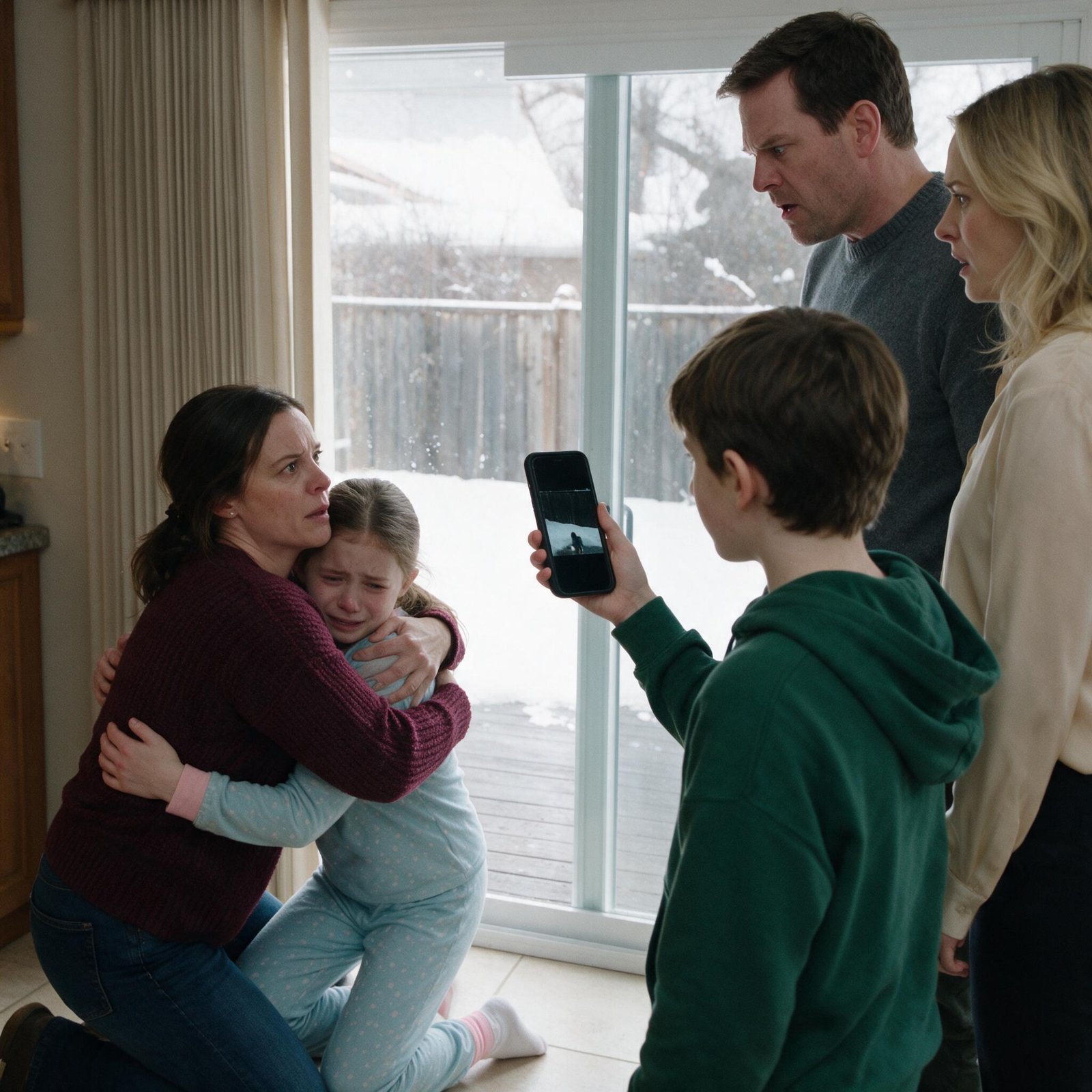
“—if he lives somewhere else?”
Rebecca did not answer Maya with the kind of promise adults made when they wanted a child to stop being afraid.
She moved closer on the carpet until Maya could see her face and Caleb, seated beside Maya on Teresa’s rug, could hear every word.
“Caleb is your brother because he is your brother,” she said.
“No address gets to change that.”
Across the room, Teresa nodded once.
The adults could not promise that the children would sleep under the same roof.
They could promise a call every Wednesday, breakfast together every other Saturday, and an extra visit whenever a holiday schedule tried to pull them apart.
They wrote those promises into the safety plan so neither child had to depend on an adult remembering to be kind.
Eight months passed before the temporary arrangements became something the children could stop expecting to vanish.
Maya’s hands recovered fully, and the follow-up visits found no lasting tissue injury.
For a while, however, she would not walk near a glass patio door.
Rebecca did not coax her toward one or tell her that the danger was over.
In therapy, Maya learned to name what her body was doing before fear turned it into silence.
She learned that tingling was something to report, that cold was not a punishment, and that wanting her mother was not defiance.
Caleb worked on a different kind of numbness.
He had spent months believing that if he had opened the door sooner, recorded sooner, or sent the message sooner, none of it would have happened.
His counselor made him write the ages of everyone in the kitchen on separate cards.
Rebecca was thirty-five.
Eric was thirty-eight.
Lauren was thirty-four.
Caleb was twelve.
Then she asked him which cards belonged to the people responsible for making the house safe.
For the first three sessions, he kept reaching toward his own name.
By spring, he could leave it on the table.
The final family order did not produce a winner.
It produced boundaries.
Maya continued living with Rebecca, and Lauren was barred from contact with her while the separate child-safety investigation followed its own course.
Eric’s time with Maya remained professionally supervised and tied to the safety recommendations, not to a timetable that rewarded him for completing classes.
He and Lauren were living apart, but the court did not treat separation as proof that he had changed.
Teresa received continuing guardianship of Caleb after the home reviews and hearings were complete.
The order preserved Caleb’s relationship with Maya and named Rebecca as an approved adult for their visits.
Eric had told the truth at the hearing, and that truth had cost him the easier story in which one bad decision belonged only to his wife.
It did not buy forgiveness.
It did mean that neither child had to carry his lie into the future.
At one supervised meeting, Eric apologized to Caleb for turning adoption into a debt.
Caleb listened without being asked to answer.
When the hour ended, the supervisor—not Caleb—watched the clock.
The first snow of the next winter came on a Saturday morning.
It softened the edges of the neighborhood park and covered the sledding hill before breakfast.
Maya arrived in a purple coat, snow pants, waterproof gloves, and a pair of thick wool socks because she had insisted on choosing every layer herself.
Caleb was already there with Teresa, standing beside a red plastic sled and trying not to look nervous.
Rebecca carried a thermos, and Teresa carried two folded blankets that no one expected to need.
The four of them reviewed the plan once: warm car at the curb, cocoa in the thermos, adults watching, children free to come in whenever they chose.
Then Rebecca put her phone away.
Teresa did the same.
Caleb reached for his own phone out of habit.
His thumb hovered over the timer icon.
Maya caught him and rolled her eyes with the magnificent impatience of a child whose brother was embarrassing her.
“You’re not the grown-up,” she said.
Caleb looked at Rebecca.
She smiled, but she did not make the decision for him.
He locked the screen and pushed the phone deep into his coat pocket.
Maya climbed onto the front of the sled, and Caleb sat behind her with his boots planted in the snow.
Teresa gave them one push.
They went down crooked, spun halfway around, and landed in a drift with Maya laughing so hard she could not stand.
Caleb scrambled up first.
The old fear rose automatically, asking him to inspect her fingers, check the time, and decide whether she was safe.
Before he could obey it, Maya held both gloved hands above her head.
“Still warm,” she called.
Rebecca was already walking toward them.
Teresa was already lifting the sled.
The adults had seen.
The adults were coming.
Caleb offered Maya one hand because brothers helped each other out of snowdrifts, not because her safety belonged to him.
She took it and pulled him down beside her instead.
By the time they stopped laughing, five whole minutes had passed.
For the first time in a year, Caleb had not counted them.
Part 5 of 5 · He Said It Was Only Five Minutes